Loading...
Serving Santa Barbara, CA and surrounding areas. (820) 223-1462
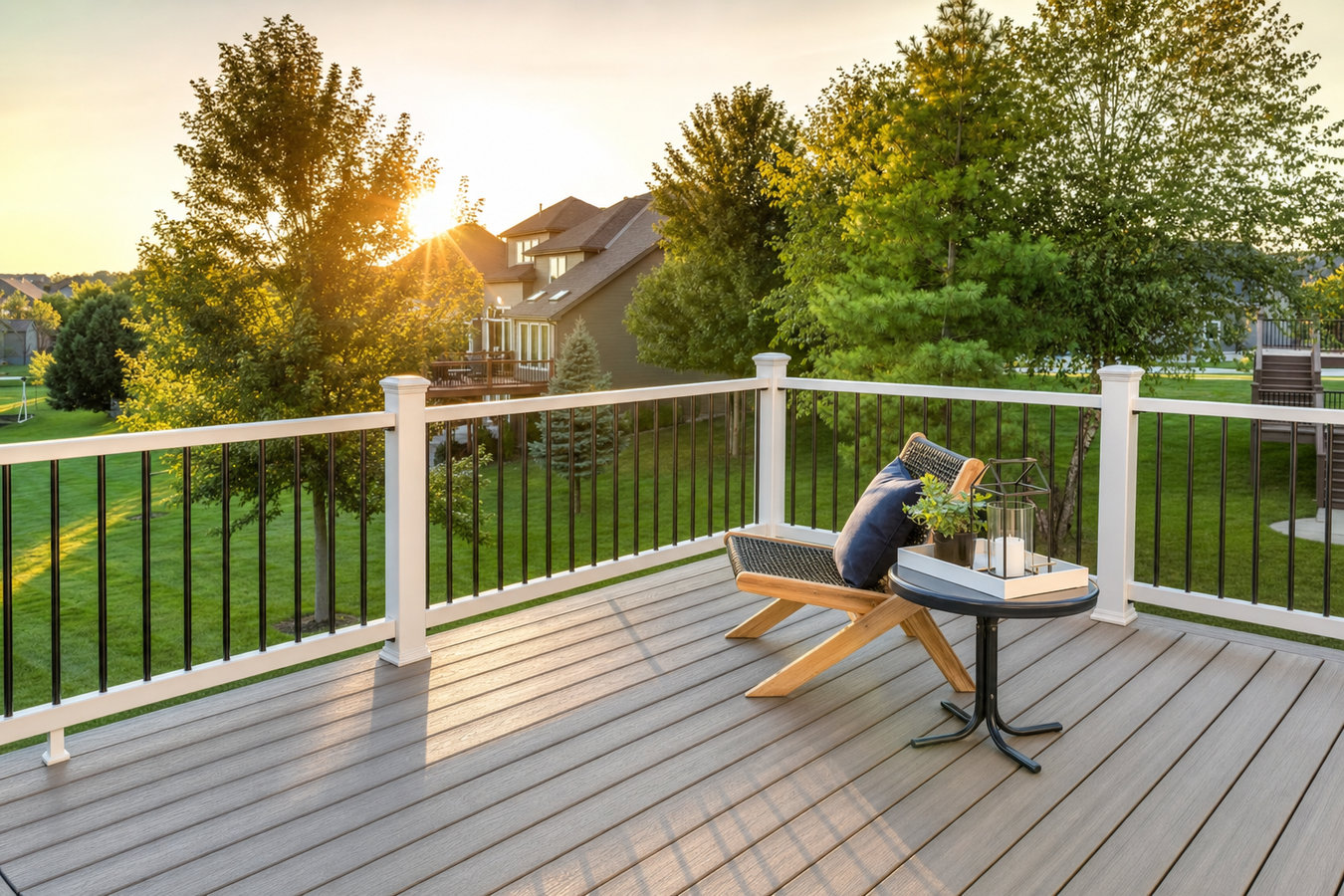
A wobbly railing on a Santa Barbara hillside deck is not a minor issue. We install deck railings that are properly anchored, inspected by the city, and built with materials that hold up against salt air - so your deck is somewhere you actually feel comfortable standing.
Deck railing installation in Santa Barbara covers replacing or adding deck railings to any elevated deck - wood, aluminum, composite, or glass options - typically completed in one to three days of active work, with the full timeline running two to four weeks once the city permit is factored in.
In California, a railing is required on any deck surface 30 inches or more above the ground - and on the hillside lots common throughout Santa Barbara, that threshold is reached on most decks. The railing is not decoration: it is the structural element between your guests and a significant fall. Getting it right means setting the posts properly into the deck frame, choosing hardware rated for coastal exposure, and spacing the vertical pieces close enough to meet child safety requirements. Homeowners building or rebuilding a deck often schedule railing work alongside a multi-level deck project so the whole structure is inspected and closed out at the same time.
The Consumer Product Safety Commission identifies improperly anchored posts as the leading cause of railing failures - a fact that matters more on a hillside Santa Barbara property where a fall could mean a long drop. We inspect the existing deck frame during every estimate visit, address any rot or structural issues before installation begins, and pull all required permits through the City of Santa Barbara's Community Development Department.
Stand at your railing and push firmly sideways with both hands. If anything moves or feels springy, the posts are no longer anchored securely. This is the clearest sign the railing is not doing its job - and on a hillside Santa Barbara property where a fall could mean a long drop, it is something to address right away rather than monitor.
If your railing has any metal components and you notice orange staining, rough patches, or paint that is bubbling and peeling, salt air corrosion is at work. This is especially common on decks within a mile of the Santa Barbara waterfront. Surface rust can sometimes be treated, but deep pitting means the metal has been compromised and replacement is the safer call.
Press your thumb firmly into the wood at the base of each post where it meets the deck surface. If the wood gives under pressure, it is rotting from the inside. Cracked or splintered rails are also a sign the wood has dried out - common on south-facing Santa Barbara decks that get intense afternoon sun year-round. A new railing attached to a rotting post will not be safe no matter how good the new materials are.
Stand back and look at the spacing between the vertical pieces of your railing. If you can imagine a young child squeezing through or getting their head stuck, the spacing does not meet current safety standards. This is a common issue on older Santa Barbara homes - many decks built before the 1990s were never updated to reflect current child safety requirements.
The right railing material depends on where your deck is, how high it sits above grade, and what your neighborhood's HOA or design review requires. For homes close to the water, powder- coated aluminum and composite railings are the most maintenance-friendly choices - neither material is affected by salt air the way steel or uncoated metal can be, a consideration that applies to deck railings across the region. For homeowners who want the clean, open sight lines of a glass panel system, we install frameless and semi-frameless glass options designed for coastal environments and compatible with the architectural character common in Santa Barbara's hillside neighborhoods.
Whatever material you choose, every railing we install starts with a frame inspection. If your existing deck frame has any rot or structural weakness, we address it before anchoring new posts - because a railing is only as strong as what it is bolted into. For homeowners planning a full deck replacement or new build, we coordinate railing installation as part of a complete custom deck design and build so every element is designed and inspected together.
Suits coastal properties within a mile or two of the water. The coating seals the metal against salt exposure, it will not rust, and it requires almost no maintenance year to year.
Suits homeowners who want a wood-like appearance without the annual maintenance. Unaffected by salt air, UV-stabilized, and available in colors that complement composite decking.
Suits hillside and elevated decks where you want to preserve the view. Panels are unaffected by salt air and require only an occasional rinse to stay clear - check HOA guidelines before committing to this option.
Suits homeowners who prefer a traditional wood look and are willing to maintain it every few years with staining or sealing. A good choice for inland neighborhoods with less direct salt air exposure.
Two factors make railing work in Santa Barbara different from most markets. First, salt air. Neighborhoods close to the Pacific - the Mesa, the harbor area, and much of the Eastside - sit in a corrosion zone that eats through standard metal hardware and uncoated fasteners faster than most homeowners expect. A railing that looks fine at installation can show orange rust streaks within two or three years if the wrong materials were used. We specify marine-grade or powder-coated hardware on every coastal job because replacing a railing after five years is far more expensive than doing it right the first time. Second, hillside elevation. A significant share of Santa Barbara homes in the Riviera and foothill neighborhoods sit on lots where the deck is 10 feet or more above grade - which changes the structural requirements for post anchoring and railing height in ways that a flat-lot installation does not.
We work throughout the area, including Carpinteria where beachside homes face the most direct salt air exposure and material selection is especially critical, and Montecito where elevated estate decks require careful post anchoring and sometimes HOA design review before installation begins. We know both the structural demands and the local approval processes that come with this area.
We ask about your deck size, current railing condition, and whether you have a material preference in mind. Most contractors quote in person rather than over the phone because the condition of your frame makes a real difference to the final price. We reply within 1 business day.
We measure your deck perimeter, check post and frame condition, and look for any rot or corrosion that needs addressing before new railings go in. You will receive a written estimate that itemizes materials, labor, and the permit fee - no vague ballpark numbers.
We submit the permit application to Santa Barbara's Community Development Department before any work begins. Typical processing runs a few business days to a couple of weeks. You do not have to call the city or track the application - we handle it.
Installation takes one to two days for most standard decks. The city inspector checks the finished work - typically a 20-to-30-minute visit. Once it passes, we walk you through the completed railing, demonstrate how solid it is, and explain any maintenance the material requires.
Free on-site assessment. We pull the permit, coordinate the inspection, and leave your deck clean.
(820) 223-1462Salt air corrosion is a specific problem with specific solutions. We know which coatings, alloys, and composite products hold up near the Santa Barbara waterfront because we have installed them here. A contractor who asks a vague question about "outdoor-rated" materials probably has not dealt with this environment regularly - and you will see the difference in two or three years.
On an elevated Santa Barbara deck - the Riviera, Mission Canyon, or any foothill neighborhood - post anchoring is not a checkbox item. We use anchoring methods appropriate for the height and load of your specific deck, and the city inspector verifies the work before we close out the permit. No shortcuts on a job where a railing failure means a serious fall.
Santa Barbara's Community Development Department requires a permit for most railing work. We handle the application, coordinate the inspection, and close out the permit after final sign-off. You receive a copy of the permit for your home improvement records - useful documentation when you sell. The North American Deck and Railing Association sets the standards we follow on every installation.
You can verify any California contractor's active license in minutes at the California Contractors State License Board. We carry current workers' compensation and general liability insurance for the full duration of any work on your property. Any contractor who hesitates when you ask about their license number is a red flag.
A railing is one of the few things on your deck that is both safety-critical and legally required. It is worth making sure the person installing it actually knows this city, this climate, and this permit process - not just how to bolt a standard kit together.
A complete deck built around your property, including integrated railings designed for your material choice and neighborhood requirements.
Learn MoreTwo or more connected deck levels for sloped Santa Barbara lots, with railings on every elevated edge included in the build.
Learn MorePermit season fills up - lock in your project date before the summer deck rush so your railing is solid and inspected before you need it most.